
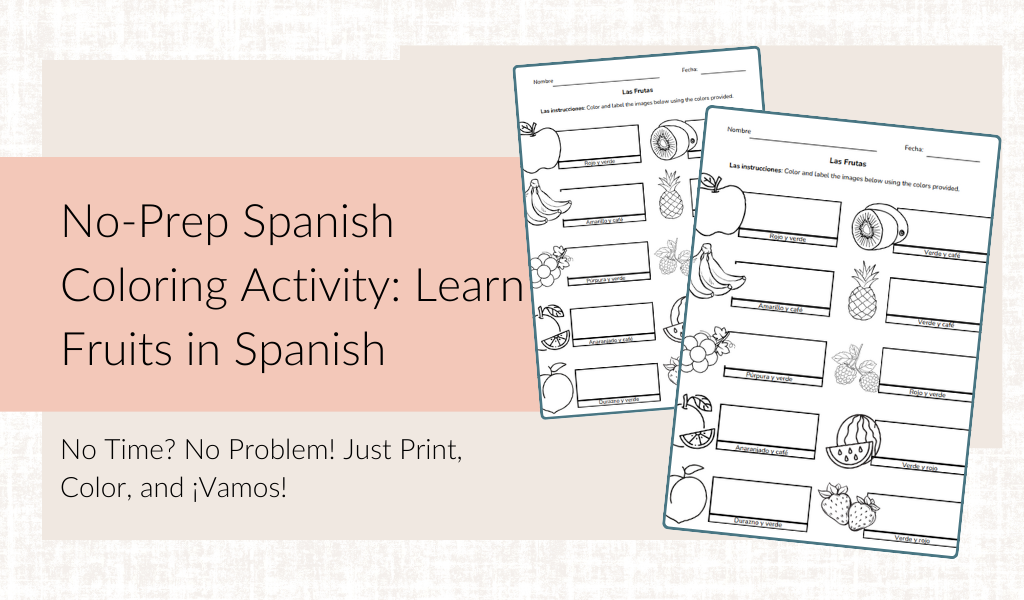
There are days when, despite the best planning, the universe throws a curveball at you. Maybe you have a surprise assembly, maybe your students finish their work faster than expected, or perhaps you just need a quick go-to lesson to fill a gap. Whatever the case, having an easy, fun, and educational activity up your sleeve can save the day. That’s where the Color in and Label: Las Frutas activity comes to the rescue!
This no-prep Spanish coloring activity to learn fruits in Spanish isn’t just a simple worksheet—it’s your “in-a-pinch” lifesaver that requires zero prep and keeps students engaged while reinforcing their Spanish fruit vocabulary. Let’s dive into how this activity works, the science behind why it’s so effective, and how you can make it a classroom staple for those “uh-oh” moments.
The Power of Quick, Interactive Activities
We’ve all been there—desperately looking for something to keep the class moving when your original plan falls through. Quick, engaging activities like Color in and Label do more than just fill time. They tap into students’ visual and kinesthetic learning styles, which research shows are crucial for language acquisition.
According to cognitive learning theory, visuals help learners retain information better because the brain processes visual information faster and holds onto it longer than text alone (Mayer, 2021). By having students both color and label fruits in Spanish, they’re engaging multiple senses—coloring (visual), writing (kinesthetic), and reading (linguistic)—which strengthens their grasp of the language.
Plus, the fun nature of coloring takes the pressure off, making the learning process feel more like play and less like work. And we all know how beneficial low-stress environments are for second language learning (Krashen, 1982).
Why Color in and Label: Las Frutas Works
This activity is designed to reinforce fruit vocabulary (las manzanas, las uvas, etc.) while also reviewing colors (rojo, verde, amarillo). Here’s why it’s a must-have for any elementary Spanish class:
- Interactive Learning: Students are not only learning fruit names and colors but actively engaging with them by coloring and labeling.
- Low-Prep: With everything you need in one packet, this activity requires zero additional prep—just print and go!
- Kinesthetic and Visual: Coloring is hands-on, making it perfect for students who thrive with visual or kinesthetic learning styles.
- Flexible: Use this as a warm-up, a main activity, or even a fun end-of-class wrap-up.
5 Fun Ways to Use This Activity
Let’s be real—this activity is versatile enough to save you time and stress while keeping your students learning and engaged. Here are five ways to use it in your classroom:
- Classroom Warm-Up: Start the day with a quick 5-minute coloring session to settle students in. Have them color and label one or two fruits each morning as a calm and quiet entry activity.
- Brain Break: If your class is getting restless, use this as a brain break! Students can color while taking a breather, giving their brains a little relaxation while still practicing Spanish.
- Mini Quiz: After students finish coloring and labeling, turn it into a mini quiz. Call out a fruit in English and have them point to their labeled Spanish fruit. This encourages active listening and participation.
- Small Group Work: Pair students and let them work together to label and color the fruits. This promotes teamwork and allows peer-to-peer teaching as they help each other with vocabulary.
- Exit Ticket: Before the end of the class, have students show you their labeled fruits and ask them to verbally say the color and name of one fruit. A perfect way to check for understanding before they walk out the door!
Extension Activities to Reinforce Learning
- Fruit Salad Game: After students have colored their worksheets, have them imagine they’re making a fruit salad. They must list (in Spanish) which fruits they’ll add and describe their colors. This is a fun, interactive way to practice vocabulary beyond the worksheet!
- Fruit Scavenger Hunt: Hide pictures of fruits around the classroom. Give students clues in Spanish, and have them find the corresponding fruit. This adds movement to the lesson and keeps students actively engaged.
- Create Your Own Fruit: Once students have mastered the fruit names and colors, let them create their own imaginary fruits! They can color, name, and describe them in Spanish, expanding both their vocabulary and creativity.
Classroom Management Tip: Keep It Low-Stress
Sometimes, quick activities can spiral into chaos if clear guidelines aren’t set. Here’s how to keep things calm and productive:
- Set Clear Time Limits: Give students a set amount of time to color and label, keeping them focused and on task.
- Encourage Quiet Work: Explain that this is a calm activity meant for quiet reflection and focus. Keep the room serene by playing soft Spanish music in the background.
- Monitor Progress: Walk around the room, checking in with students and offering help when needed. This keeps everyone on track and minimizes off-task behavior.
The Gist of it All
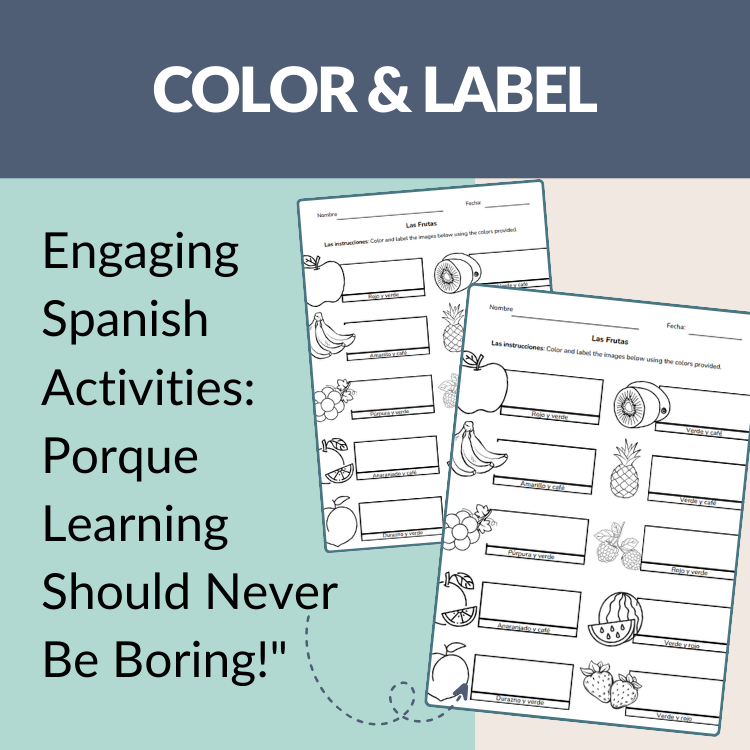
Even the best-laid lesson plans can go off course, but having a low-prep, engaging activity like Color in and Label: Las Frutas can save the day. It’s more than just a no-prep Spanish coloring activity: to learn fruits in Spanish, it’s an interactive, fun, and flexible tool that reinforces Spanish vocabulary while keeping your students engaged. Whether it’s a warm-up, brain break, or exit ticket, this activity will ensure your students keep learning in a stress-free, hands-on way. And the best part? You can use it again and again, turning a quick 5-minute filler into a full lesson plan whenever you need it.
Want more fun with “La comida”? Check out these blog posts!
- Fun Spanish Trivia Games for the Classroom: Boost Learning with ¡Contamos Juntos!
- Why Spanish Reading Comprehension Activities Matter (y Cómo Hacerlas Fun!)
- Spanish vegetables activity for elementary students
- How Interactive Stories Support Spanish Language Learning
- Spanish Learning Through Games: Charades for Vegetables Vocabulary Mastery
Resources
- Mayer, R. E. (2021). Multimedia learning. Cambridge University Press.
- Krashen, S. D. (1982). Principles and Practice in Second Language Acquisition. Pergamon Press.