
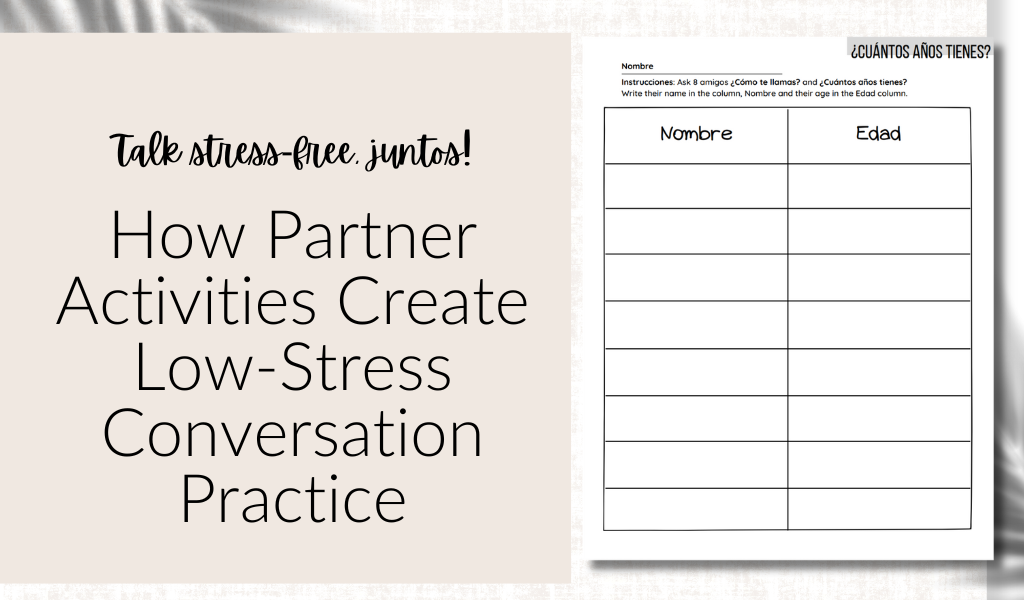
Today, we’re getting into one of the most effective ways to get students practicing their Spanish with stress-free Spanish conversation practice. Not only do these activities simulate real-world conversations, but they also create a fun, pressure-free environment for students to practice new vocabulary and structures. It’s like giving your students a dress rehearsal before the big performance: they get comfortable with the language in a supportive space, which leads to confidence in using it outside the classroom.
Let’s talk about why these simulations are essential for language acquisition, how to set up the perfect partner activity, and—of course—introduce you to a fun, interactive way to get students asking each other “¿Cuántos años tienes?” with the “¿Cuántos años tienes?” Entrevista activity!
Why Real-World Simulations Are Essential for Learning a Second Language
Real-world simulations, like partner interviews, are crucial because they reflect the actual use of language conversations students will have in daily life. By practicing in these low-stakes settings, students gain familiarity with speaking in Spanish without the fear of making mistakes. These kinds of low-stress Spanish conversation activities provide:
5 Positive Classroom Management Strategies for Partner Speaking Activities
So, how do you set up a speaking activity where students feel encouraged and supported, but also stay on task? Here are five classroom management strategies to make your interview activities run smoothly:
- Set Clear Expectations Up Front: Clearly explain the goals of the activity. Let students know they’ll be asking and answering specific questions (in this case, “¿Cómo te llamas?” and “¿Cuántos años tienes?”), and that participation is key. Keep it simple but clear: they’re responsible for asking their partners and recording the responses.
- Practice First: Before diving into the partner work, model the activity with a student or do a whole-class example. This ensures everyone understands how the flow of the conversation should go. Plus, practicing as a class helps reduce nerves (and let’s face it, makes the instructions easier to follow!).
- Use Positive Reinforcement: Instead of focusing on what students might do wrong, reward positive behavior and interactions. Encourage students who are staying on task, asking thoughtful questions, or helping each other out. Compliments like, “I love how you’re practicing your Spanish!” go a long way.
- Pairing Strategically: While it can be tempting to just say “Find a partner!” consider pairing students strategically. Sometimes pairing a novice with an expert can help the novice feel supported. Other times, pairing students of similar levels (novice with novice, expert with expert) creates a comfortable setting for both. The key? Mix it up based on the day’s objectives. If it’s about confidence-building, let students practice with someone at their level.
- Rotate Roles: To keep everyone engaged, rotate roles. If one partner is always asking questions, they may lose focus when it’s the other partner’s turn. Switching roles often ensures that both partners stay engaged and practice equally.
Get Your Resource: ¿Cuántos años tienes? Entrevista
Introducing Cuentos años tienes? Entrevista Activity
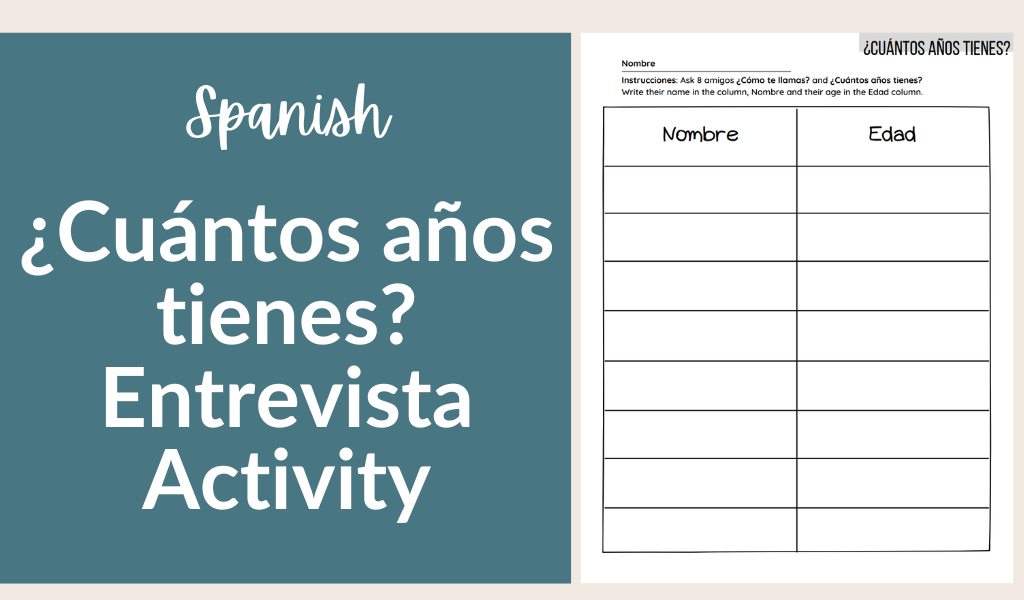
Ready to try out an interview-based activity in your classroom? The “¿Cuántos años tienes?” Entrevista activity! is a simple yet effective way for students to practice asking and answering questions in Spanish. In this case, they’ll be focusing on introducing themselves and talking about their age—perfect for early learners who are mastering numbers and basic conversation skills.
Here’s what’s included:
- Partner Interview Sheet: Students ask 8 classmates “¿Cómo te llamas?” and “¿Cuántos años tienes?” They’ll write down their partner’s name and age in Spanish—reinforcing both speaking and writing skills.
- Interactive Speaking Practice: It’s not just about writing! Students will practice these conversations aloud, building confidence in their speaking abilities.
- Class Engagement: This activity works well with all students moving around the room, talking to one another, and reinforcing their new vocabulary.
3 Unique Ways to Use This Activity in the Classroom
- Station Rotation: Set up the activity as one station in a rotation of language-learning activities. While one group is practicing the interview, others could be working on reading or writing. After 10-15 minutes, rotate! It’s a fun way to keep the energy high and provide variety.
- Homework Extension: This activity works great as a homework assignment. Have students interview family members or friends, then bring their answers back to class. It encourages real-world application, and they get to practice outside the classroom.
The Gist of it All
Partner activities like the “¿Cuántos años tienes?” Entrevista activity! offer students a low-stress, real-world way to practice language, while giving them the confidence to speak with others. By mixing up partners and setting clear expectations, you can run a successful interview activity that reinforces both vocabulary and conversational skills. Whether as a classroom activity or homework assignment, this fun and easy tool will get your students chatting—and learning!
Resources
Ellis, R. (2005). Principles of instructed language learning. System, 33(2), 209-224.
Krashen, S. (1982). Principles and Practice in Second Language Acquisition. Pergamon Press.
Vygotsky, L. (1978). Mind in Society: The Development of Higher Psychological Processes. Harvard University Press.