
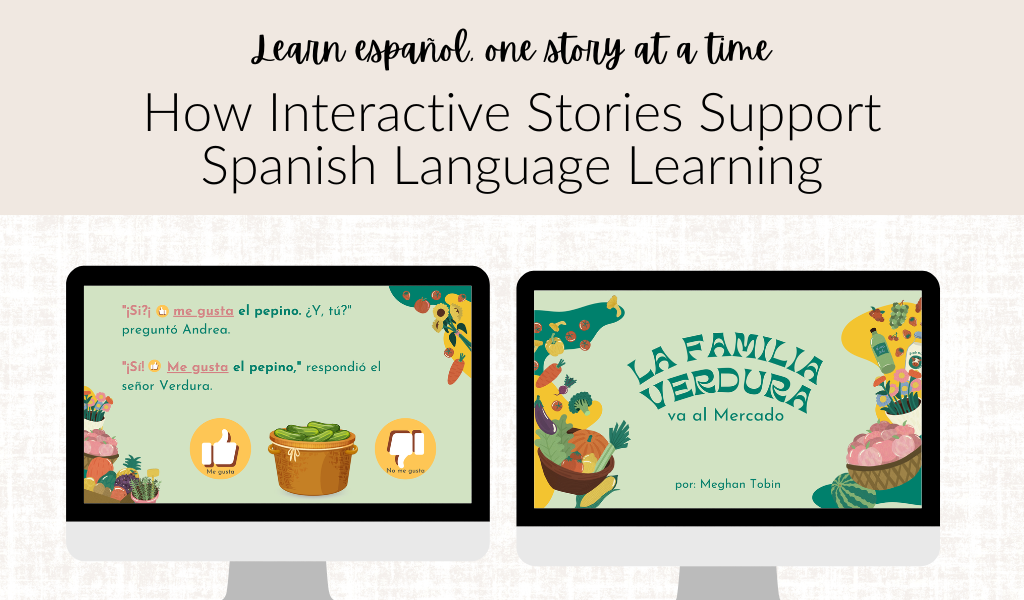
Hey there, Teach! Let’s talk about something near and dear to every language learner’s heart: stories! Remember how we all learned our first language? That’s right: through the power of storytelling. From bedtime tales to family anecdotes, stories are an essential part of how we naturally acquire language, and the same magic applies when learning a second language. Interactive Spanish stories for Elementary learners, such as La Familia Verdura va al Mercado, can transform your Spanish classroom into a vibrant, engaging, and stress-free language-learning experience.
Why Stories are a Powerful Way to Learn a Second Language
Think about it: how did you learn your first words? Most of us learned through stories told to us by our parents, teachers, or even through picture books. Stories give context to words, making it easier to understand their meaning and usage. This is exactly how we want students to learn a second language, too! By using narratives, we immerse students in language, culture, and real-life communication all at once. Here’s why storytelling is a game-changer for language acquisition.
Interactive Storytelling: Making It Even More Engaging
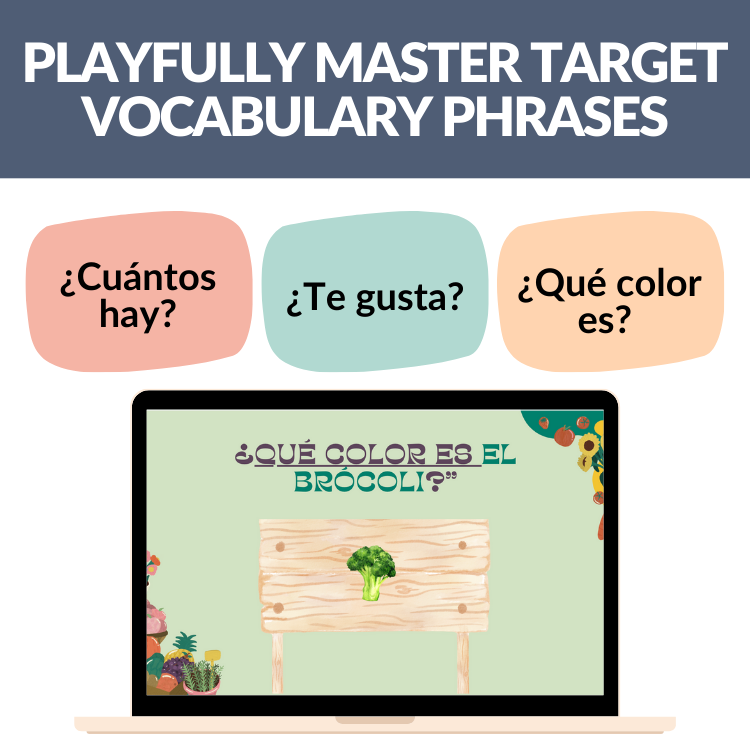
Now, let’s add another layer to storytelling: interaction. Instead of students passively listening or reading, what if they could participate in the story by asking and answering questions? This is where the magic of La Familia Verdura va al Mercado comes in. This beautifully written, interactive story pulls students into the plot while letting them practice essential vocabulary like vegetables, colors, and numbers—all while reinforcing and practicing questions like “¿Cuántos hay?”, “¿Qué color es?”, and “¿Te gusta?”
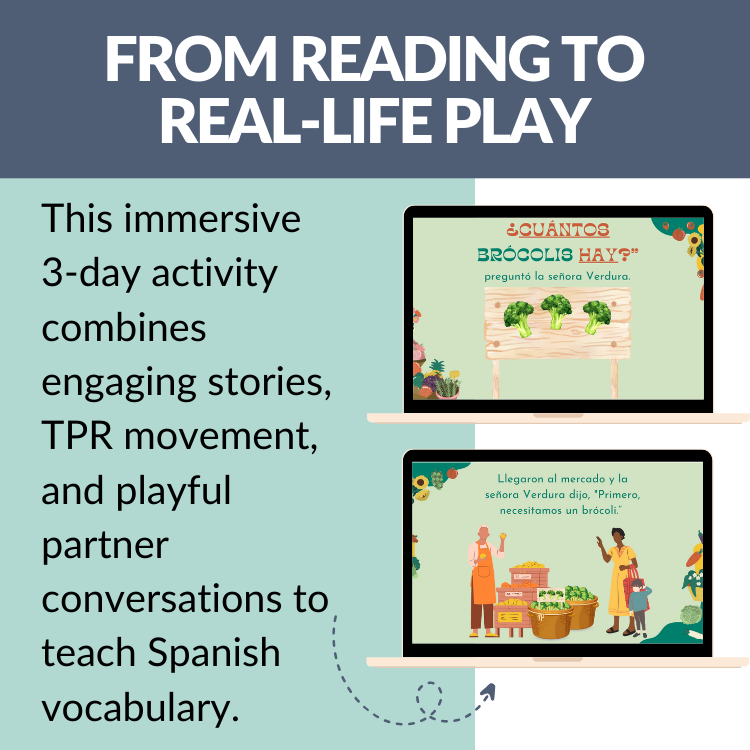
Interactive elements turn a regular story into an engaging learning tool that allows students to:
- Practice Speaking and Listening: Asking and answering questions helps solidify vocabulary and grammar without the stress of traditional drills.
- Stay Engaged: When students get to participate actively, it keeps them invested in what happens next—after all, they’re part of the story!
- Build Confidence: Practicing new sentence structures through a fun story makes speaking less intimidating and more natural.
Introducing La Familia Verdura va al Mercado
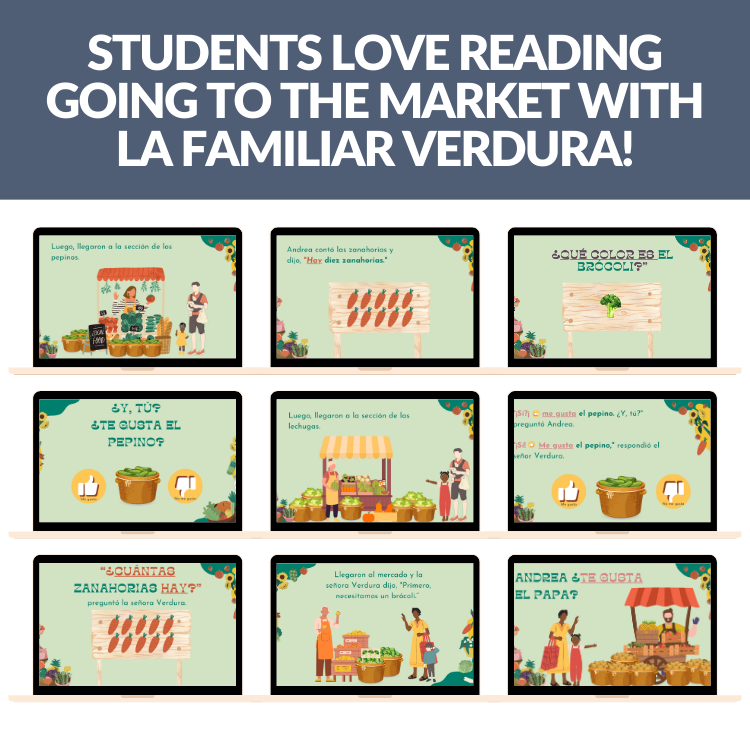
If you’re looking for an interactive Spanish story for Elementary learners that combines fun, engagement, and learning, La Familia Verdura va al Mercado is the perfect addition to your classroom. This interactive digital story introduces essential Spanish vocabulary through a playful narrative about a family of vegetables (yes, you read that right!). Students follow along as the veggies go to the market, answering questions and interacting with the story to reinforce learning.
Here’s what the story covers:
- Vegetable Vocabulary: Students will master words like “la zanahoria” (carrot) and “el tomate” (tomato) as they explore the market.
- Colors and Numbers: The story integrates questions like “¿Qué color es?” and “¿Cuántos hay?” to help students practice these essential concepts in a meaningful way.
- Preferences: Students also get to express their opinions using “¿Te gusta?” questions—perfect for keeping the conversation going!
Get Your Resource: "La Familia Verdura va al Mercado" Projectable Story
5 Fun Ways to Use This Activity in the Classroom
- Storytime & Speaking Practice: Read the story aloud to the class, and after each section, pause and ask students questions like “¿Qué color es?” or “¿Cuántos tomates hay?” This gets everyone involved in the conversation and keeps them engaged.
- Partner Question Exchange: After reading a section of the story, split the class into pairs. One student asks questions based on the story while the other answers, and then they switch roles. This is a great way to get students comfortable asking and answering in Spanish with minimal pressure.
- Interactive Whiteboard Fun: Project the story on the interactive whiteboard and ask students to come up and answer questions by touching the correct images (e.g., “Toca el tomate rojo”). This brings a kinesthetic element to the lesson!
- Act It Out: Want to add a bit of drama to your classroom? Have students act out the story as you narrate it. They can pretend to be different vegetables going to the market, adding gestures to reinforce vocabulary (and plenty of giggles along the way).
- Coloring and Counting Activity: Have students draw the vegetable you call out as you ask questions about it. After they finish, you can ask them to count how many tomatoes or carrots they colored and say the number aloud in Spanish.
The Gist of it All
La Familia Verdura va al Mercado is a beautifully crafted story that brings vegetables (and vocabulary!) to life in your classroom. By using stories, we can help students learn vocabulary in context, making it more meaningful and easier to remember. With interactive elements that allow students to ask and answer questions, this activity reinforces key language structures while keeping the learning environment low-pressure and fun. Whether you’re using it as a full lesson, a speaking activity, or a game, this resource will get your students talking, learning, and—most importantly—enjoying the process of learning Spanish.
Looking for more “la comida” fun? Check out these resources!

Resources
Krashen, S. (1982). Principles and Practice in Second Language Acquisition. Pergamon Press.
Nation, I. S. P. (2001). Learning Vocabulary in Another Language. Cambridge University Press.
Vygotsky, L. (1978). Mind in Society: The Development of Higher Psychological Processes. Harvard University Press.