Lesson planning? ✅
Classroom organized? ✅
Keeping 25+ kids engaged while practicing Spanish numbers and vegetables? That’s a little trickier.
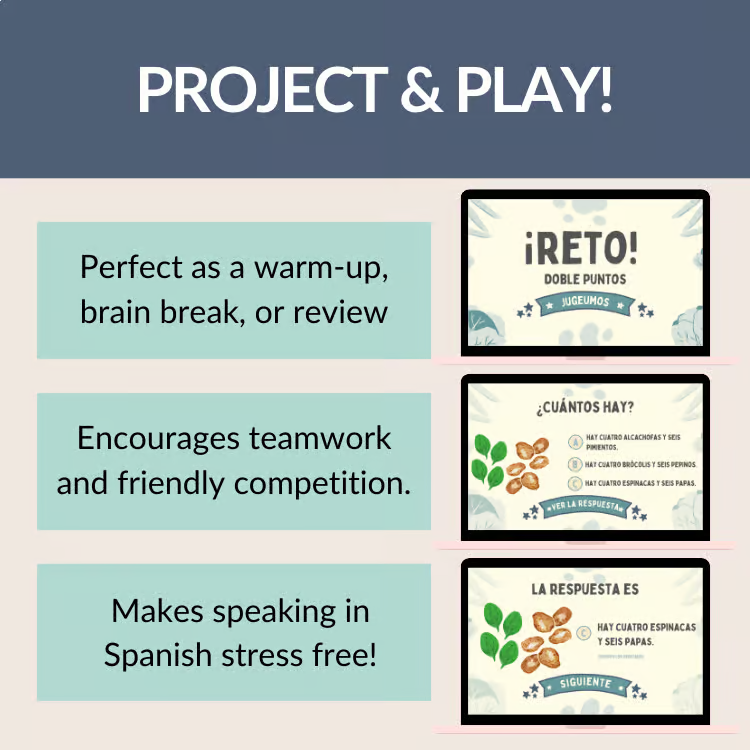
That’s where whole-class games come in. They’re not just fun (but tbh…they are!), they’re one of the best ways to reinforce vocabulary, build fluency, and keep everyone involved.
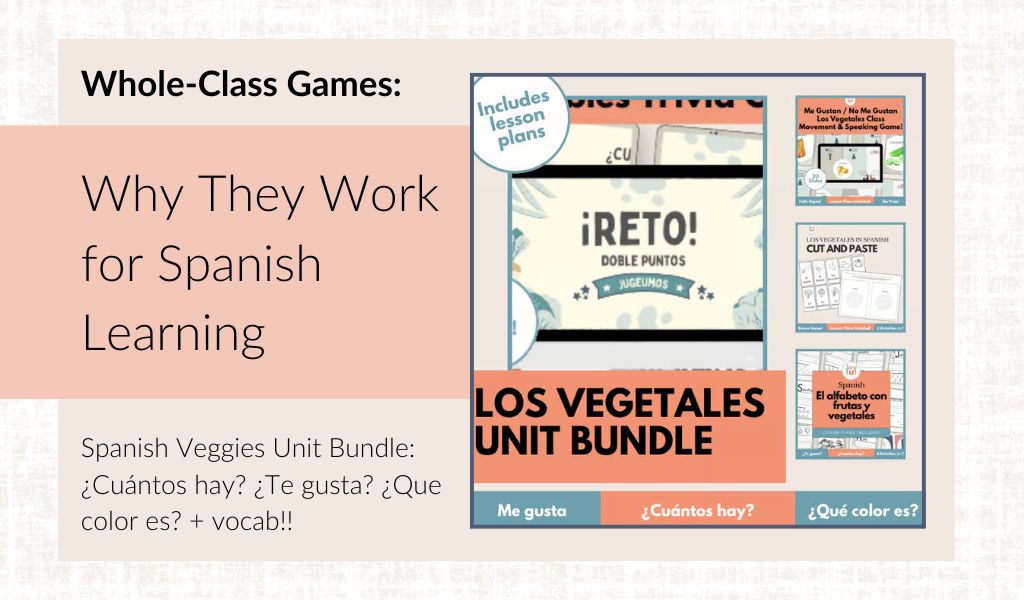
That’s why I love using ¡Contamos Juntos! Spanish Counting & Vegetables Game. It takes two essential vocab sets (numbers and vegetables) and turns them into a low-prep, high-energy activity that kids ask to play again and again.
Why Games Work in Spanish Class
10 Easy Whole-Class Games You Can Use Anytime
1. ¿Quién Tiene…? (Who Has…?) Chain Game
Focus: Vocabulary review and listening comprehension
How to Play:
Give each student a card that says something like, “Tengo una manzana. ¿Quién tiene una banana?” The student with la banana card responds and reads their own prompt next. Continue until it loops back to the first student.
Why It Works: This keeps everyone attentive and listening for vocabulary in context while building fluency through repetition.
2. La Pelota de Preguntas (Question Ball)
Focus: Speaking and conversational fluency
How to Play:
Toss a soft ball around the class. Whoever catches it answers the teacher’s question in Spanish (for example, “¿Qué te gusta comer?”). You can also write prompts directly on the ball.
Why It Works: Adds spontaneity and encourages all students to speak in a low-pressure setting.
3. Carrera de Palabras (Word Race)
Focus: Vocabulary recall and teamwork
How to Play:
Divide the class into teams. Call out a theme such as comida, animales, or verbos. Students take turns running to the board to write a word that fits the category.
Why It Works: The pace and competition keep energy high while reinforcing word recall.
4. El Detective (The Detective Game)
Focus: Listening comprehension and deduction
How to Play:
Choose one student to be el detective and step outside. Pick another to be el culpable (the leader). The class begins clapping or chanting in Spanish while the leader changes the rhythm or movement. The detective returns and must guess who the leader is.
Why It Works: Strengthens observation and listening skills while maintaining full-class participation.
5. La Silla Caliente de Vocabulario (Vocabulary Hot Seat Remix)
Focus: Descriptive language and circumlocution
How to Play:
A student in the “hot seat” faces away from the board while the teacher displays a word behind them. Classmates give clues only in Spanish to help them guess, such as “Es una fruta roja” or “La comes en verano.”
Why It Works: Forces students to think creatively in Spanish and use known words to describe new ones.
6. Encuentra a Alguien Que… (Find Someone Who…)
Focus: Interpersonal communication and question formation
How to Play:
Give students a bingo-style sheet with prompts such as “Le gusta el brócoli” or “Tiene una mascota.” They walk around asking classmates questions in Spanish to fill in their sheet.
Why It Works: Encourages authentic communication and repetition of key conversational structures.
7. La Ruleta (The Spinner Game)
Focus: Vocabulary and grammar review
How to Play:
Create a digital or paper spinner with categories such as verbos regulares, colores, or animales. Spin it, then call on a student or team to say three related words or sentences in Spanish.
Why It Works: Highly adaptable for any unit and encourages spontaneous speaking.
8. El Teléfono Roto (Broken Telephone)
Focus: Pronunciation and listening accuracy
How to Play:
Students form a line. Whisper a Spanish sentence to the first student (for example, “Me gusta comer las fresas en el verano”). They pass it down the line by whispering in Spanish. The last student says it aloud to see how much it has changed.
Why It Works: Reinforces careful listening and pronunciation in an engaging way.
9. La Carrera de Traductores (Translator Relay)
Focus: Vocabulary translation and teamwork
How to Play:
Divide the class into teams. The teacher says a word in English, and the first student runs to the board to write or say the Spanish translation. For added challenge, have them use the word in a full sentence.
Why It Works: Promotes collaboration and quick recall under friendly competition.
10. El Juego del Semáforo (Traffic Light Game)
Focus: Listening comprehension and command forms
How to Play:
Call out actions using verde, amarillo, and rojo to indicate when to move, slow down, or stop. Incorporate fun commands in Spanish such as “Salta como una rana” or “Camina en círculo.”
Why It Works: Combines movement, comprehension, and laughter while reinforcing imperative verbs.
Teaching Tip:
Rotate these games throughout your week as warm-ups, brain breaks, or review sessions. They require minimal prep, promote real communication, and build a classroom culture where learning Spanish feels active, inclusive, and fun.
Teacher Tips for High-Energy Games (Without the Chaos)
Let’s be real: a good classroom game walks a fine line between energized and total pandemonium. The trick is all in the setup. Here’s how to keep the learning strong and the volume reasonable.
Set the Stage Clearly
Before the fun begins, take one minute to model exactly how the game works. Show them what playing in Spanish looks and sounds like. When expectations are clear, everyone can focus on having fun—not figuring out what’s happening.
Use a Timer (and Stick to It)
Short rounds = high energy. Long rounds = glazed eyes. A visible timer keeps everyone alert and adds that competitive spark without the chaos.
Create a Reset Signal
Choose one signal—like a clap pattern or a bold “¡Silencio!”—and practice it before you start. When things get loud (and they will), you’ll have a fast, familiar way to bring the group back together.
Give Everyone a Role
Assign quick jobs: scorekeeper, timekeeper, materials manager. It builds ownership and keeps even your quietest students engaged. Plus, it saves you from juggling every moving piece yourself.
Wrap It Up in Spanish
Before moving on, take one minute to debrief—in Spanish. Ask, “¿Qué palabra escuchaste más?” or “¿Qué parte fue tu favorita?” It helps solidify the learning and gives students a chance to reflect, all while staying in the target language.
Ready to Put It All Into Action?
If you found yourself thinking, “Okay, these tips are solid… but what do I actually USE in class tomorrow?” — you’re in luck. You don’t need to reinvent the wheel or scramble through last-minute prep.
The Spanish Veggies Unit Bundle has already done the heavy lifting for you. It’s designed to capitalize on everything we just talked about: clear expectations, quick rounds, reset signals, student roles and Spanish-rich debriefs.
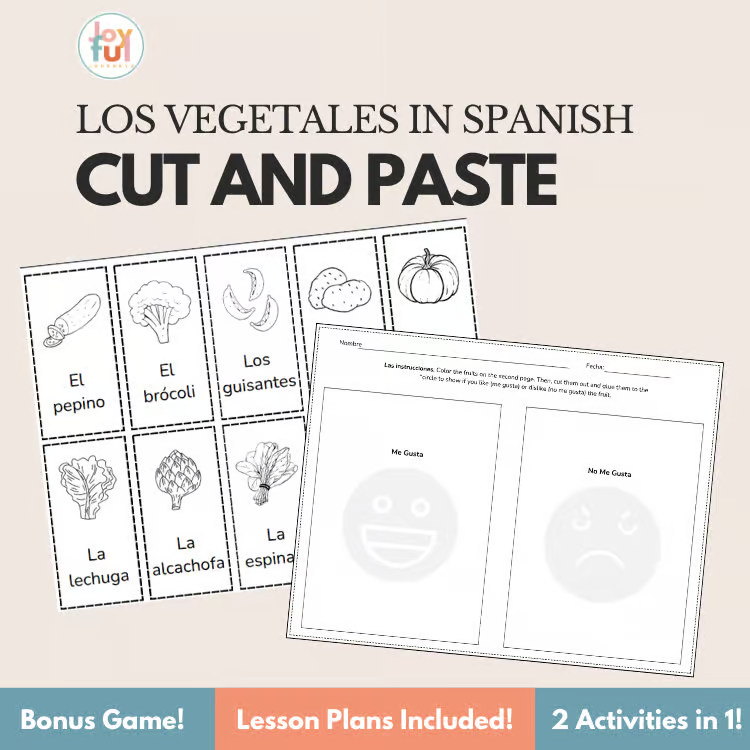
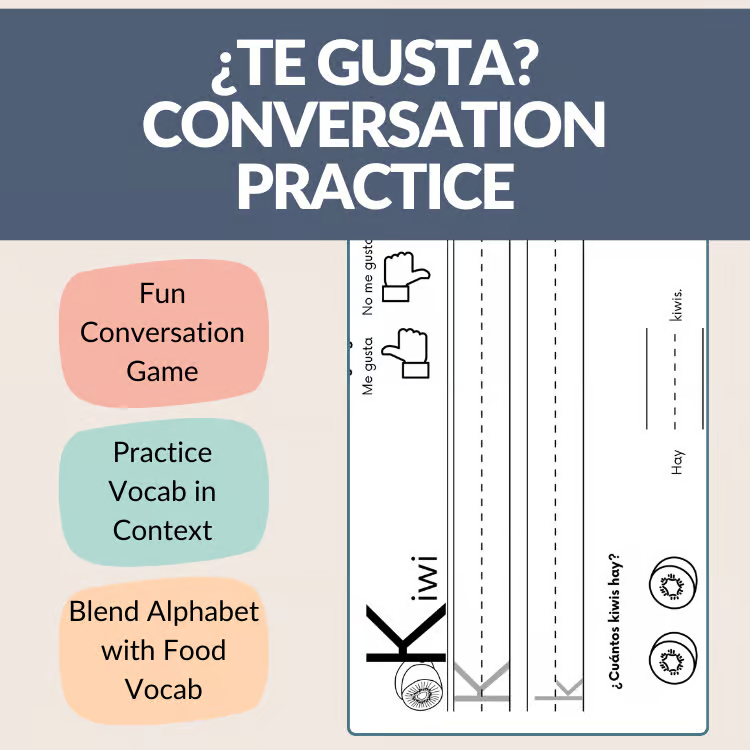
With this ready-to-go unit, you’ll have games that fire up energy, routines that keep things under control, and vocabulary (vegetables + colors + preference structures like ¿Te gusta? / No, no me gusta…) built into each activity.
So instead of spending your evening crafting materials, you’ll walk into class confident, equipped, and ready for students to cut, move, speak, and learn — all in Spanish.
Are you ready? Let’s make vocab stick.

Your Prep-Free Shortcut to Spanish Vocabulary Success
Let’s be honest — keeping students engaged while teaching core vocabulary can feel like juggling flashcards, grammar rules, and attention spans all at once. That’s exactly why I created the Spanish Veggies Unit Bundle: ¿Cuántos hay? ¿Te gusta? ¿Qué color es? + vocab!!. It’s everything you need to teach vegetables, colors, counting, and likes/dislikes — all through movement, speaking, and whole-class play. Think TPR meets classroom management sanity.
This bundle includes interactive slides, cut-and-paste worksheets, no-prep games, and speaking prompts that keep students using Spanish from bell to bell. You’ll see higher participation, stronger vocabulary retention, and far fewer “Can we be done?” faces. Whether you’re running Simón Dice, ¿Cuántos hay?, or a quick Te gusta warm-up, these resources turn your classroom into a space where language learning feels active, natural, and fun — no extra prep required.
Want a Complete Spanish Veggies Unit?
If you’re looking for a full set of resources to teach vegetables in Spanish, check out my Spanish Veggies Unit Bundle on TPT. It includes ready-to-use lessons on numbers, likes/dislikes, colors, charades, labeling, and more. Perfect for building vocabulary throughout the year with activities your students will actually enjoy.
👉 Explore the full bundle here!
Because at the end of the day, the best way to learn a language is to make it fun.
Hungry for more ideas? Keep the veggie fun going with these other posts full of teaching tips and classroom activities!”
Fun Spanish Trivia Games for the Classroom: Boost Learning with ¡Contamos Juntos!
Why Spanish Reading Comprehension Activities Matter (y Cómo Hacerlas Fun!)
The Gist of it All
Whole-class games aren’t just “extra.” They’re one of the most effective ways to boost engagement, reinforce vocabulary, and build fluency in Spanish. With ¡Contamos Juntos!, you’ve got everything you need to make Spanish numbers and vegetables fun, interactive, and memorable.