
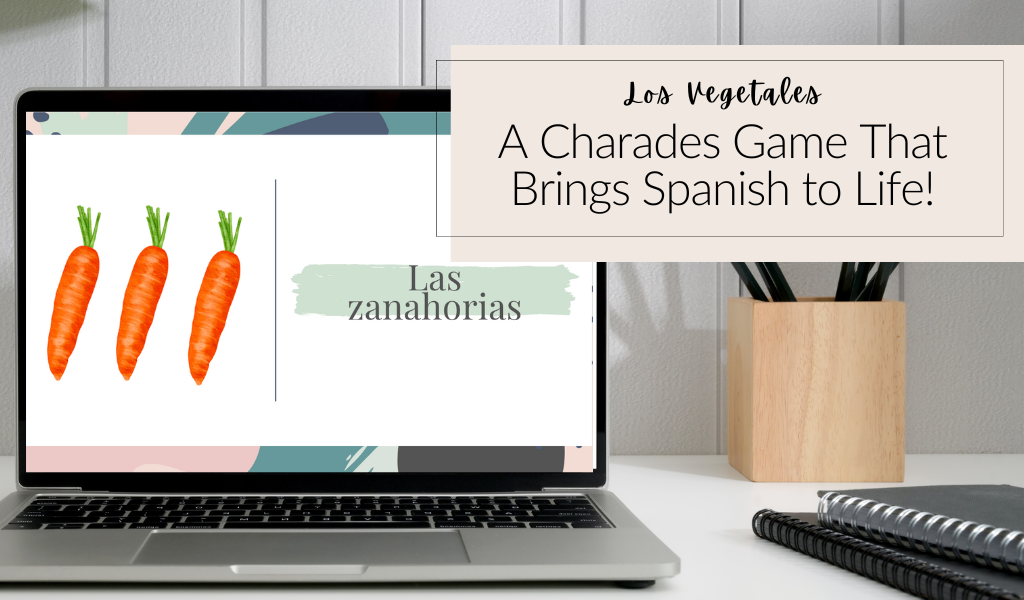
¿Ever Seen a Student Act Like a Brócoli? Now You Will!
Let’s be real: vocabulary drills can feel like a snoozefest. But what if I told you that your students could be laughing, moving, and actually retaining their Spanish veggie vocab—without the dreaded worksheet fatigue? That’s where Las Charadas: Los Vegetales comes in as a great Spanish vegetables activity for elementary students!
This charades-style game turns language learning into an interactive, high-energy experience that gets students up and moving, while reinforcing Spanish food vocabulary in a way they won’t forget. Bonus? It aligns perfectly with ACTFL standards and supports communication skills across interpersonal, interpretive, and presentational modes.
So, grab your digital presentation, let students unleash their inner zanahoria, and let’s dive into how this game can transform your Spanish class! 🌟
How It Works: A Game That’s Más Divertido Than a Spelling Quiz
This 40-minute lesson follows a simple but effective format. Here’s the breakdown (don’t worry, the lesson plans are included!)
Step 1: Warm-Up with TPR & Digital Visuals (5 Minutes)
- Project Los Vegetales vocabulary slides.
- Model Total Physical Response (TPR): act out each food item while saying it aloud. (Think: munching an imaginary carrot for zanahoria—they’ll love it.)
Step 2: Charades Setup (5 Minutes)
- Pair students and assign Uno (actor) and Dos (guesser).
- Show a vegetable on the screen—Uno acts it out, Dos guesses in Spanish.
Step 3: Charades in Action (20 Minutes)
- Countdown: “Tres, Dos, Uno…” then reveal the veggie!
- Uno gets dramatic, acting it out while Dos tries to guess.
- When a pair gets it right, they yell “¡Listo!” and say the word aloud to the class.
- Bonus round: Switch roles and keep the energy going!
Step 4: Flashcard Reinforcement (Optional, 20 Minutes)
- After guessing, students write the vocab term on a flashcard.
- They color the image, quiz a partner, and reinforce learning while waiting.
Step 5: Wrap-Up with a Call & Response (10 Minutes)
- Call out words in English, students respond in Spanish with gestures.
- End with a cheer or quick celebration—because making Spanish fun should always be the goal!
Porque Vocabulary Learning Shouldn’t Be Boring (¡Obvio, verdad?)
Why This Game Works (Hint: It’s Science, Not Just Fun!)
Sure, kids love charades. But there’s more at play with this Spanish vegetables activity for elementary students…
Neuroscience Says… Movement = Better Retention!
- Physical activity while learning strengthens memory recall (Ratey, Spark: The Revolutionary New Science of Exercise and the Brain).
- Acting out words engages the sensorimotor cortex, which helps students store vocabulary long-term (Asher, Total Physical Response).
Communicative Approach: Learning Like Native Speakers
- Guessing in real-time conversation mimics how we acquire language naturally.
- It reinforces spontaneous speaking skills—no robotic recitation here!
Engages ALL Learners
- Kinesthetic students thrive in movement-based games.
- Visual learners connect images with vocabulary.
- Social learners love partner work.
- Even shy students participate by acting—no pressure to speak solo!
Pro Tips for Classroom Success
- Differentiate It: Use tiered vocab—novices can act out common veggies (zanahoria, lechuga), while advanced learners try trickier ones (alcachofa).
- Spice It Up: Have students use props (real veggies or toy food) for extra engagement!
- Make It Digital: If teaching remotely, students can act out words on video calls or use GIFs & emojis for a virtual version.
- Sneaky Pronunciation Practice: Have students say the word before & after acting to reinforce speaking fluency.
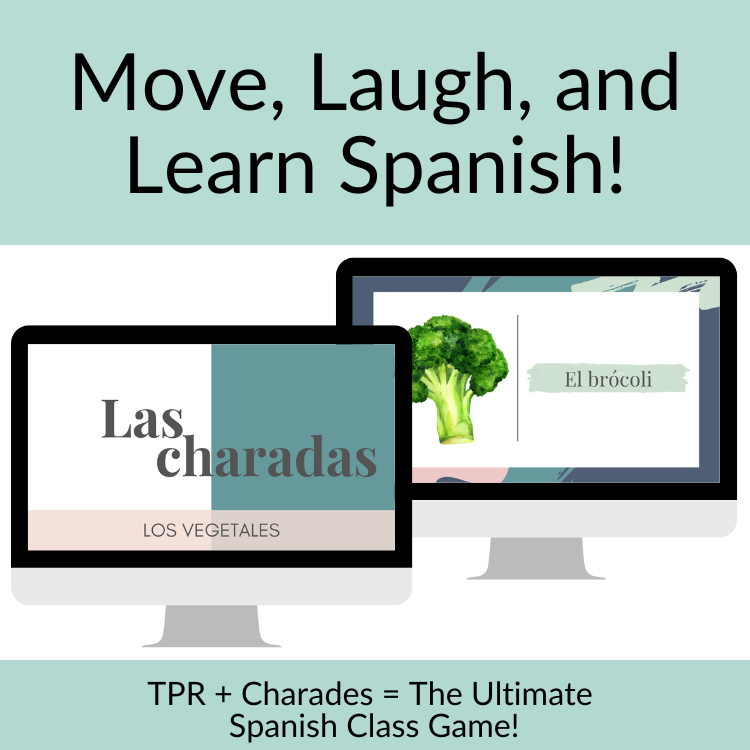
Ready to turn vocab practice into an unforgettable experience? 🎭🌟 With Los Vegetales: Las Charadas, your students will be moving, laughing, and speaking Spanish—without even realizing they’re learning! No more blank stares or worksheet fatigue—just pure engagement and retention. So, what are you waiting for? Try it today and watch your class come alive with language! ¿Listo para jugar? Click on the picture to grab your copy!
Want more digital fun in Spanish? Check out these posts!
The Gist of it All
If you want a simple, engaging, no-prep way to teach Los Vegetales vocab without resorting to flashcard drills, Las Charadas: Los Vegetales is your go-to activity.
It’s ACTFL-aligned, neuroscience-backed, and—most importantly—teacher-approved to get kids speaking, moving, and remembering Spanish words más rápido que un pepino rodando por la mesa.
So, what’s your favorite Spanish class game that gets students moving? Drop your best charades-inspired ideas in the comments! ⬇️
Resources
- Asher, J. J. (1969). The Total Physical Response Approach to Second Language Learning.
- Ratey, J. J. (2008). Spark: The Revolutionary New Science of Exercise and the Brain.
- Krashen, S. (1982). Principles and Practice in Second Language Acquisition.