

Hey there, Joyful Journey Makers! Ready to turn your classroom into a high-energy, vocabulary-packed space where students move, laugh, and learn? Today, we’re diving into how combining Total Physical Response (TPR) with the classic game of charades helps students absorb new vocabulary faster—specifically, vegetables! If you’ve ever wondered how movement-based learning, games, and language acquisition all fit together, you’re in for a treat. (And no, it’s not broccoli—though we’ll get to that in a second.)
The Science Behind TPR and Game-Based Learning
Why does TPR work so well, and why should we combine it with a fun game like charades? Let’s break it down.
TPR (Total Physical Response) involves students using physical movement to react to language input. Developed by Dr. James Asher, it’s all about pairing language with action, helping students connect the vocabulary to something tangible—like pretending to chop a carrot while saying “zanahoria.” And there’s some serious science backing it up!
When students perform physical actions while hearing new vocabulary, they’re engaging multiple areas of the brain, which strengthens retention. Physical movement activates the motor cortex, while the visual and auditory processing centers light up when they hear and see the words. The brain is essentially building layers of memory, making it easier for students to recall the vocabulary later (Sousa, 2016).
Games like charades add another layer of magic. When students are having fun, they’re more likely to participate, and they lower their affective filter (Krashen, 1982). This “filter” is essentially the mental barrier we put up when we’re nervous or anxious, and lowering it means students are more open to learning and absorbing new material
Why Movement & Games Help with Language Learning
- Engages Multiple Learning Styles: TPR and charades cater to kinesthetic, auditory, and visual learners. Whether students learn best by seeing, hearing, or doing, this approach has them covered.
- Boosts Memory Retention: The more senses we engage, the stronger the neural pathways we create. Combining movement with spoken words strengthens those connections, helping vocabulary stick in long-term memory.
- Reduces Stress: Game-based learning creates a low-stress environment where students are less afraid of making mistakes. It’s fun and engaging, and they’ll hardly realize they’re learning (but trust me—they are!).
- Promotes Social Learning: Charades require students to work together, building a sense of classroom community. They’re learning from one another, which adds to the collaborative vibe.
Classroom Management Tips for High-Energy Games
Now, we know that any activity involving movement and excitement can get a little wild if not managed well. Here are 5 quick tips to keep your classroom running smoothly during a high-energy game like this:
- Set Clear Expectations Before You Start: Always start by explaining the rules and expectations. Make it clear that students must raise their hand when guessing or answering (rather than shouting over each other). This keeps the game organized and respectful.
- Assign Roles: To keep things organized, assign specific roles to students. You might have “guessers,” “performers,” or even “team leaders” to ensure everyone is participating equally.
- Use a Timer: Having a set time for each round of charades can prevent it from dragging on. Set a fun timer (perhaps one with sounds!) to create urgency and excitement.
- Incorporate a Quiet Signal: Before starting, establish a quiet signal (like raising your hand or using a bell) to quickly regain focus if things get too loud.
- Positive Reinforcement: Celebrate the teamwork, creativity, and effort your students put into the game. Whether they guess right or wrong, praise their participation!
Get Your Resource: Me Gustan / No Me Gustan Los Vegetales Charades!
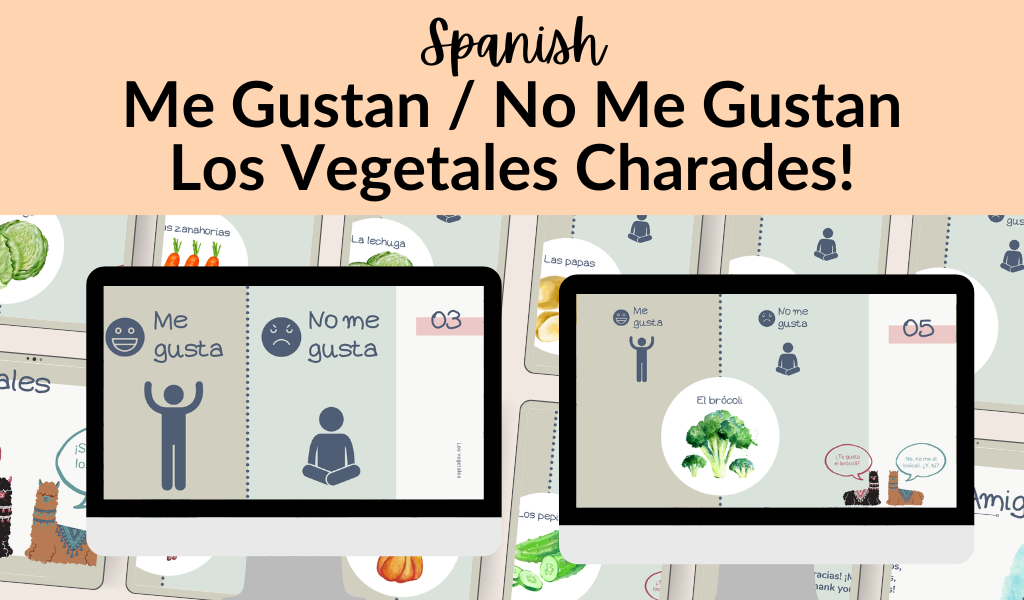
Now, let’s talk about how this colorful and soothing activity can bring vegetables to life in your classroom. The “Me Gusta / No Me Gusta Vegetales” Movement and Speaking Activity is perfect for practicing vegetable vocabulary in a fun and dynamic way. Whether you’re using it to introduce new vocabulary, as a warm-up, or even as a brain break, this activity fits right into any lesson plan.
Here’s what’s included in this awesome resource:
- Bright, engaging visuals: The soothing design helps maintain a calm learning environment, while still being colorful and attention-grabbing.
- Movement-based prompts: Students will love getting up and moving as they act out different vegetables.
- Speaking practice: Perfect for reinforcing me gusta/no me gusta structures, students get the chance to practice speaking as they discuss their favorite veggies!
3 Ways to Use This Activity in the Classroom
- Vocabulary Practice: Use this activity to introduce and practice new vegetable vocabulary like “zanahoria,” “papa,” and “tomate.” Have students take turns acting out the vegetables while the rest of the class guesses which one it is.
- Class Warm-Up: Kick off the class with this activity to get everyone energized and in Spanish-mode. It’s a great way to start the day on a fun note and sets the tone for active learning.
- Brain Break: Need to get your students refocused mid-lesson? Use this activity as a quick, fun brain break. Let students act out and guess the vegetables for a refreshing, educational pause.
3 Ways to Play
- Individual Charades: One student acts out the vegetable, and the rest of the class guesses in Spanish. A quick and easy way to reinforce vocabulary!
- Team Charades: Divide the class into teams. Each team member takes turns acting out a vegetable, while their teammates try to guess. The team with the most correct answers wins!
- Partner Charades: In pairs, one student acts out the vegetable while their partner guesses. Then, they switch roles. This ensures everyone gets a chance to practice both acting and guessing.
The Gist of it All
Combining TPR with charades in your classroom is a surefire way to engage students, reinforce vocabulary, and make language learning fun! The Me Gusta / No Me Gusta Vegetales activity adds just the right balance of movement, speaking practice, and visual engagement to help students learn those tricky vegetable names in Spanish. Whether you use it as a warm-up, brain break, or vocabulary review, it’s sure to become a class favorite.
Want to make a whole unit out of it? Check out these additional resources now available on the Joyful Journeys in Language Learning TPT store!
Resources
Sousa, D. A. (2016). How the brain learns (5th ed.). Corwin Press.
Krashen, S. D. (1982). Principles and practice in second language acquisition. Pergamon Press.
Frost, R. (n.d.). Total physical response – TPR. TeachingEnglish. https://www.teachingenglish.org.uk/professional-development/teachers/managing-lesson/articles/total-physical-response-tpr