
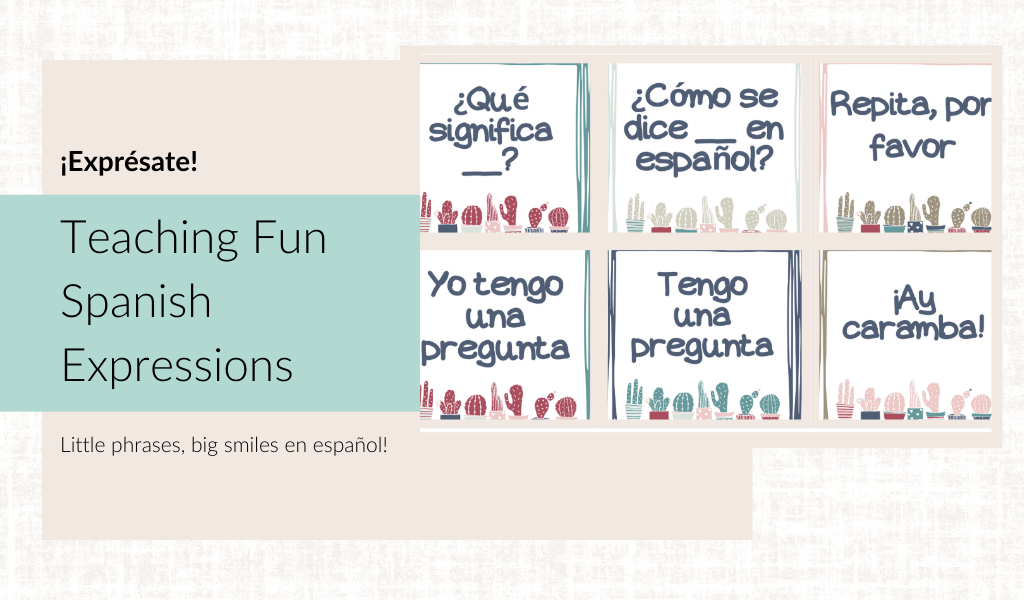

Hey there, Joyful Journey Makers! Let’s talk about one of the most fun and effective ways to immerse your students in language—teaching classroom expressions. These everyday phrases aren’t just about communication; they’re about building connections, fostering confidence, and bringing a little more fun into language learning! By teaching expressions like “¿Puedo ir al baño?” and “¡Ay caramba!”, you’re giving students tools to interact in Spanish beyond the typical classroom scenarios. Today, we’ll explore why teaching these expressions is so important, how it helps students connect to the culture, and creative ways to use my Cactus-Themed Classroom Expressions resource in your classroom.
Why Fun Classroom Expressions Matter
When it comes to language learning, phrases that students can use in real-world situations help make the language feel natural and engaging. Here’s why teaching classroom expressions is essential:
Get Your Resource: Cactus-Themed , Spanish Classroom Expressions Resource


Now, let’s make this even easier for you with my Cactus-Themed Classroom Expressions resource! This vibrant set of mini-posters is designed to help students feel confident using common classroom expressions, all while adding some colorful charm to your classroom decor.
What’s Included:
- Cactus-Themed Mini Posters: Beautifully designed, full-color posters with common Spanish classroom expressions like “¿Puedo ir al baño?” (Can I go to the bathroom?) and “Repita, por favor” (Repeat, please).
- Teacher Instructions: Tips and strategies for how to introduce these phrases and reinforce them in your classroom.
- Whip It! Game Instructions: A fun, interactive game to get your students practicing these expressions in a lively way.
How to Use This Resource in Your Classroom
- Daily Warm-Up: Start each class by reviewing the classroom expressions with your students. Have them stand up and repeat the phrases out loud. Pair each phrase with a gesture or action to get them moving while speaking Spanish!
- Interactive Bulletin Board: Hang the mini-posters on a bulletin board or around the classroom where students can easily see and reference them. Whenever they need to ask a question or use an expression, encourage them to use the Spanish phrases from the posters.
- Student-Led Routines: Make these expressions part of your class routine by assigning a “classroom expressions leader” for the week. That student is responsible for using and encouraging others to use Spanish expressions throughout the day.
- Reward System: Encourage students to use these expressions by rewarding them when they do. You can offer points, stickers, or other small incentives to motivate them to speak Spanish naturally throughout the day.
- Small Group Role-Play: Have students work in small groups to role-play different classroom scenarios using the expressions. For example, one student can play the teacher while the others use the expressions to ask questions and interact.
Game Time: How to Play Whip It!
One of the most fun ways to get students speaking Spanish is through the Whip It! game included in my resource. Here’s how it works:
- Set Up: Begin by saying a classroom expression out loud and doing a gesture that matches the phrase. For example, say “¿Puedo ir al baño?” while making a gesture of raising your hand.
- Whip It!: Quickly “whip” the expression and gesture to another student by pointing to them or calling their name. That student must then repeat the expression and your gesture.
- Add a New Expression: After repeating, the student chooses a new expression from the posters, says it out loud, and creates a new gesture to go along with it.
- Keep It Going: The next student must repeat both the original gesture and the new gesture before adding another expression. The game continues until every student has had a turn, with the expressions and gestures building as you go!
Why It Works: This game combines repetition with physical movement, engaging students in a way that reinforces language retention. Plus, it’s fast-paced and fun, keeping students on their toes while they practice Spanish expressions!
Fun Extension: Gesture and Repeat Challenge
For an added challenge, turn it into a Gesture and Repeat Challenge:
- Start by choosing an expression from the posters and demonstrating the gesture.
- The next student repeats the gesture and adds another expression with a new gesture.
- Keep building the chain of expressions and gestures, and see how long your students can remember and repeat all the gestures in order. It’s a fun and active way to reinforce the vocabulary!
The Gist of it All
Teaching fun classroom expressions gives your students the confidence to use Spanish in real-world scenarios while connecting with the culture behind the language. My Cactus-Themed Classroom Expressions resource provides everything you need to get started, from mini-posters to games like Whip It!. Whether you’re using these phrases as part of your daily routine or turning them into a class competition, your students will love learning Spanish in a fun, interactive way.
Resources
Language acquisition: An overview. Colorín Colorado. (2020, February 18). https://www.colorincolorado.org/article/language-acquisition-overview
Lewis, R. (2020, November 4). What is comprehensible input and why does it matter for language learning?. Leonardo English. https://www.leonardoenglish.com/blog/comprehensible-input